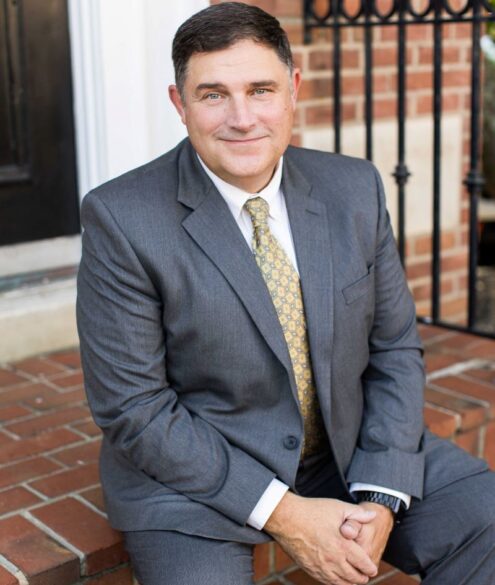
Marc A. LeBeau, Ph.D., F-ABFT
Thank you for your interest in Dr. Marc LeBeau.
Kindly spend a few minutes to learn about his experiences, achievements, and honors.
Experience in Forensic Toxicology Spanning Over Three Decades
Marc A. LeBeau, PhD, is a distinguished Forensic Toxicologist and the President of LeBeau Forensic Toxicology Consulting. He retired in 2024 after a 30-year career with the FBI Laboratory, where he served as a Forensic Examiner, Unit Chief, and Senior Scientist. Dr. LeBeau has provided expert testimony in federal, state, and county courts throughout the United States.
Chemistry, Criminal Justice, Forensic Science, and Toxicology
Dr. LeBeau earned a Bachelor’s degree in chemistry and criminal justice from Central Missouri State University in 1988, a Master’s degree in forensic science from the University of New Haven in 1990, and a Doctorate in Toxicology from the University of Maryland—Baltimore in 2005.
Known for Getting Things Done
Dr. LeBeau is a prominent leader in various scientific groups related to forensic sciences.
Current Leadership Roles
Dr. LeBeau holds several leadership and service roles in forensic toxicology. He serves as vice chair of the Toxicology Consensus Body of the AAFS Standards Board (ASB), as the Society of Forensic Toxicologists (SOFT) liaison to the Consortium of Forensic Science Organizations (CFSO), and as chair of the Ethics Committee for The International Association of Forensic Toxicologists (TIAFT). He also serves on the board of the American Board of Forensic Toxicology (ABFT).
Recognitions and Awards
Dr. LeBeau received the FBI Director’s Award for Outstanding Scientific Advancement in 2004 and again in 2020, as well as the End Violence Against Women (EVAW) International Visionary Award in 2008. He also received the Alexander O. Gettler Award in 2015 and the Rolla Harger Award in 2023, both presented by the Toxicology Section of the American Academy of Forensic Sciences (AAFS).
Past Leadership Roles
Dr. LeBeau has held numerous leadership positions in forensic science. He served as co-chair of the Scientific Working Group for Forensic Toxicology (SWGTOX), chair of the Seized Drugs and Toxicology Scientific Area Committee within the Organization of Scientific Area Committees (OSAC), and the first chair of OSAC’s Toxicology Subcommittee. He is a member and past president of both the Society of Forensic Toxicologists (SOFT) and The International Association of Forensic Toxicologists (TIAFT).
His additional service includes chairing the Industry Advisory Board of the Center for Advanced Research in Forensic Science (CARFS) and serving as a commissioner on the National Commission on Forensic Science. He also chaired the Scientific Working Group on Forensic Analysis of Chemical Terrorism (SWGFACT) and co-chaired the Scientific Working Group on Forensic Analysis of Chemical, Biological, Radiological, and Nuclear Terrorism (SWGCBRN).
Actively Advancing Forensic Science
Dr. LeBeau has helped develop guidelines and standards to strengthen forensic science practice, particularly in forensic toxicology and chemistry. His work includes advancing the investigation of drug-facilitated sexual assault and providing laboratory training in method validation, measurement uncertainty, and root cause analysis.